
Human Kindness: 69% Worldwide Willing to Put Common Good Above Self-Interest
Team WWeaV came across the article Human Kindness: 69% Worldwide Willing to Put Common Good Above Self-Interest (https://thebetter.news/common-good-people-more-helpful/) and got thinking.
We live in an age wired for cynicism, where it is easy to conclude that human empathy is in terminal decline. But what if our pessimism is entirely unfounded?
A recent global study exploring human cooperation revealed a startling reality: nearly 69% of people worldwide are willing to sacrifice personal gain for the common good. More than 100,000 individuals across 125 countries faced a simple choice between personal profit and climate action, and the overwhelming majority chose the latter. Yet, when asked what others would do, most participants assumed barely half would cooperate.
That persistent gap between how kind we actually are and how cynical we expect others to be sparked a rich conversation within our team. We didn’t just look at the numbers; we looked at what kindness actually demands of us in the wild, messy reality of daily life. Here we go!
Abhijith Suresh: The Messiness of Kindness and Self-Preservation
When I first read the recent global study revealing that 69% of people are willing to sacrifice personal gain for the common good, I felt a profound sense of relief.
As a sustainable procurement analyst, I often find it important to hit pause and acknowledge a simpler truth: at its fundamental core, sustainability is just an active, living practice of kindness. It is the conscious choice to preserve the world for others, driven not by corporate compliance, but by actual, deep-seated care.
The study measured this cooperative spirit through a financial transaction, asking participants to sacrifice a payout to fund climate action. It is a fascinating baseline, but we should probably distinguish between generosity and true kindness. Generosity often looks like throwing money at a problem or comfortably aligning with societal expectations to look good. Kindness is far messier. Sometimes, the kindest act isn’t generous at all. It can mean defying expectations, setting a rigid boundary, or delivering an uncomfortable “no” because it is genuinely the right thing to do. That takes a level of discernment a simple cash transfer just cannot capture.
It is easy to celebrate the 69% who chose to cooperate. We naturally applaud anyone who agrees with us. But what about the remaining 31%? The real challenge and the truer test of our humanity is how we treat those who actively lean away from cooperation. True kindness means extending grace to this exact group.
Maintaining the empathy required to hold space for that 31% is exhausting, which brings us to a harsh realisation about growing up. When we are young, we are taught that kindness is purely an outward export. But kindness isn’t taught; it is modelled and practiced in the wild. As we mature, we quickly learn you cannot sustain genuine outward compassion without practicing radical kindness toward yourself first. If your own cup is entirely empty, your attempts to save the world will inevitably curdle into bitter resentment (and probably a stress headache).
Ultimately, this study offers a hopeful mirror, reflecting a global community far more cooperative than our cynical, doom-scrolling instincts suggest. But a percentage on a page is just a snapshot. Kindness is not a static trait. It is a daily, deliberate choice displayed through our actions, our boundaries, our commitment to our own sanity, and the unyielding grace we extend to both the willing and the resistant.
Saurabh Aroraa: The Gap Between Expectation and Reality
This study left me with a quiet sense of hope. More than 100,000 people across 125 countries were given a simple choice: take more money for themselves, or take a little less so that, if a stranger chose the same, a larger sum would go toward protecting the planet. Nearly seven in ten chose the common good. Yet when asked what others would do, most people guessed barely half. That pessimism appeared in almost every country surveyed.
What stays with me is not the goodness itself but the gap. We are kinder than we believe each other to be. In Germany, people expected fewer than half their fellow citizens to cooperate, while in reality more than eight in ten did. That gap says less about human nature than about our fear of it. We expect selfishness, so we guard ourselves, and in guarding ourselves we sometimes create the very world we feared.
The study also found that the strongest reason people cooperated was simply believing others would too. Trust, it seems, is contagious, and so is doubt. Every time we assume the worst of someone, we quietly make the worst a little more likely. Our tradition has long pointed to this. The Gita (6.29) speaks of the one who sees the Self in all beings and all beings in the Self. Perhaps what this study captured, in its own modest way, is a trace of that truth: something in us still recognises the other as our own, even when our minds tell us otherwise.
For me the lesson is simple. Think a little better of others. Most of them were already better than we imagined…
Chandan Kumar: Kindness as a Spiritual Path
While reading Human Kindness: 69% Worldwide Willing to Put Common Good Above Self-Interest, my first reaction was almost funny. Oh, stats for kindness?
Something I always felt could never really be measured was suddenly sitting in percentages and numbers. But then again, I might be completely wrong. Even kindness can look different depending on where we stand. What feels kind to one person may not feel the same to another.
What I keep coming back to is that kindness feels less like a quality and more like a path one can choose. We spend most of our lives inside systems we created. A degree gives us a title. A company gives us a designation. A salary becomes a measure of progress. None of this exists in the wild. Nature somehow carries life without asking for these definitions.
This is where the thought becomes slightly spiritual for me.
The Isha Upanishad speaks of seeing all beings in the Self and the Self in all beings. It then asks what sorrow or delusion can remain when one begins to see that oneness. Maybe kindness is one small clue towards understanding that. I sometimes feel we arrive here as conscious beings among countless other living beings, somehow connected to a larger consciousness. Some of us notice the clues along the way. Some miss them. Some perhaps find them much later.
Maybe that is the play we call life. Finding a path that, strangely enough, may already have been there. Complex, I know.
Perhaps that is why a few things were kept simple for us. Love. Compassion. Bhava. Kindness. Small clues, perhaps left by the Creator, making that path a little easier to recognise. Kindness may not be the destination. Maybe it is simply one of the paths.
At least that is what I feel. The rest is left for each of us to find out.

Pratishtha Natarajan: The Risk of Hardening Up in a Transactional World
I think, or what I am trying to say: it is completely natural to be kind when we have an expectation that others will be kind back to us. However I find it interesting that this is the most cited reason why people chose the greater good. It’s lovely and would work in theory but what happens when we step out into the real world and have this belief and it’s either taken advantage of, or makes us naive and vulnerable. It naturally causes us to create a win lose world. It is natural to harden up. But does that serve us and our own mental health? I get why someone would choose to also be disruptive when others are being integrative. It’s what we say in negotiation a lot. Can we be integrative while the other person is being disruptive?
Saranya Iyer: Moving Beyond Productivity and Social Media Noise
Everything is viewed through the lens of productivity these days. We have been conditioned to think that way.
Unfortunately, this also seeps into our philanthropic sense with people expecting something in return for the charitable acts they do.
Volunteering just for volunteering sake and showing kindness without any ulterior motive have taken a backseat.
Even a simple act of communication is misconstrued by many, as they believe talking is the most active form of communication. No, it isn’t. Listening, on the contrary, is an active aspect between the two. People hardly listen these days. Giving an ear to others’ stories without interrupting them in between is perhaps one of the supreme acts of kindness that one can offer. I would generously offer myself to receive their stories graciously.
In the times of social media, it is easy to get overwhelmed by the visuals of people working and bringing about social change. The social media grid can force us to believe what we are doing is not enough which can push us into a downward spiral.
I would say look closely within the perimeter of your surroundings and you will find many opportunities to be part of social good. We can all start with listening. Listening simply for the sake of listening.
It is not just the climate change on the outside but also by taking care of such simple acts, we can aim for an inner climate change and that can support a larger good in the purpose of the higher self.
Sridevi Krishnan: The Limits of Money and Testing Real-World Cooperation
I found the results encouraging, though I’m not sure money alone is the best way to understand our willingness to cooperate. I would add another experiment where no money is involved, but people have to take some small action, like filling out a form or writing a letter, to help someone else. How many people would go a little out of their way when there is no guaranteed reward, or even a guarantee that their effort will make a difference? I think that would add another interesting dimension to what human kindness and cooperation look like.
Michelle Sanjana Sathish: The Reciprocal Ripple Effect
Remember there’s no such thing as a small act of kindness. Every act creates a ripple with no logical end.” – Scott Adams
When thinking about the concept of kindness, individual acts of compassion help to create a positive impact on people within our society. When we do good for others it boosts happiness for both the giver and the receiver making this reciprocal in nature. A domino effect can occur where people learn from each other about helping others, therefore, developing a strong sense of community.
Deepa Natarajan: Lived Memories and Micro-Level Giving
I didn’t look at the numbers. It was all about common good above self interest. It took me back to my childhood in the 70s. My neighbour used to take me in many times to comfort me. A single income family, wife, three kids, that’s a family of five, and they’d share with me whatever they ate. Leftover chapatis, chai. I was always welcome. That act of giving away a part of what they had even when they didn’t have enough told me what greater good was all about. I think on a micro level. If you have the opportunity, JUST DO IT! Every drop counts.






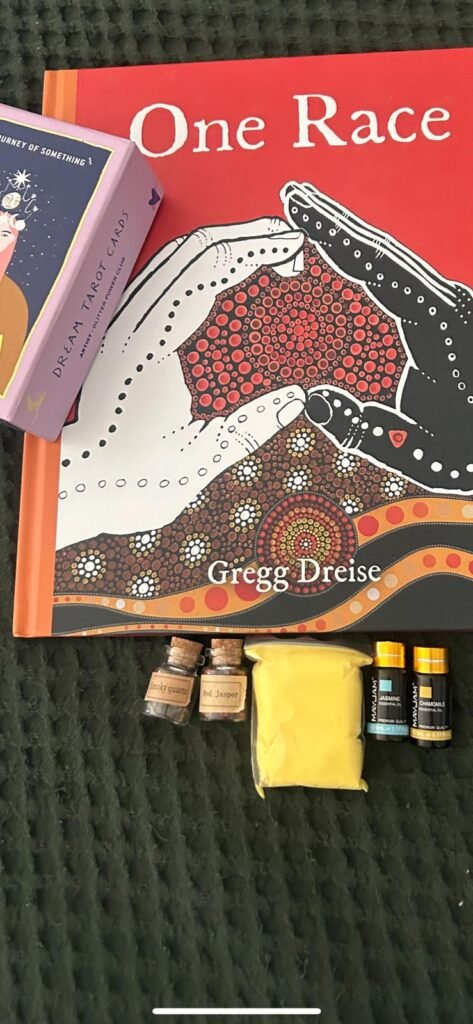



Heartfelt appreciation for choosing this theme and publishing a beautiful and genuine compilation of diverse perspectives.
Felt so heartening putting this together. Appreciate everyone for sharing their persepctive.