What a Trip to the World’s Largest LEGO Store Taught Me about Gender Representation
A Blog by Pratishta Natarajan
What do you think of when I say the word builder? Quickly say the first three words that come to mind. Mine were overalls, strong, and imaginative.
Okay, now I want you to think of three things that can be built. Mine were buildings, cars, and bridges.
If you had to associate a gender with those words, what would it be? When I first did this exercise, I surprised myself. I advocate for inclusivity and breaking stereotypes, yet my perception of building was still heavily influenced by traditional norms.
The truth is, building goes far beyond concrete and steel. We build communities. We build relationships. We build ideas, art, and choreography. We build narratives. So why does our collective imagination immediately associate building with just one demographic?
More importantly, how do we change it? To answer that, we need to look at an incredible example of corporate evolution. Let us dive into what a historic brand like LEGO is doing right now to inspire and develop the true builders of tomorrow.
Why Lego?
I want to be honest: I was never a huge LEGO fan. I found them super fun and engaging as a young child, and I would often get lost in the LEGO pit at Westside in the early 2000s. However, I completely stopped building once I entered school. I had challenges with spatial awareness and struggled to figure out how the pieces were supposed to fit together perfectly. When I could not do it, my fixed mindset decided I simply was not good at LEGO.
Fast forward to a few years ago. My mom completed her LEGO Serious Play certification and fell completely in love with the brand. She kept reminding me that Sydney is home to the largest LEGO store in the world, a place I had admittedly never set foot in. My curiosity finally started to cement when a professor of mine mentioned her own love for LEGO around the same time. Then, during a visit, my mom went to the Pitt Street store and brought back some fascinating pictures that really got me thinking. I loved what I saw, but I still viewed it as just a cool thing a company was doing, rather than a space where I could actually find my place and joy.
The Research
The years of academic training taught me never to jump to a conclusion without doing proper due diligence. So, like any good deep dive, I started by Googling “LEGO Gender Inclusivity Campaign.” The top result was their “Ready for Girls” initiative.
To back this campaign, the LEGO Group partnered with the Geena Davis Institute in honor of the UN International Day of the Girl. They conducted a massive global study, surveying nearly 7000 parents and children ages six to fourteen across seven different countries.
What they found was incredibly revealing. The core takeaway? Girls are ready for the world, but society is not quite ready to support them.
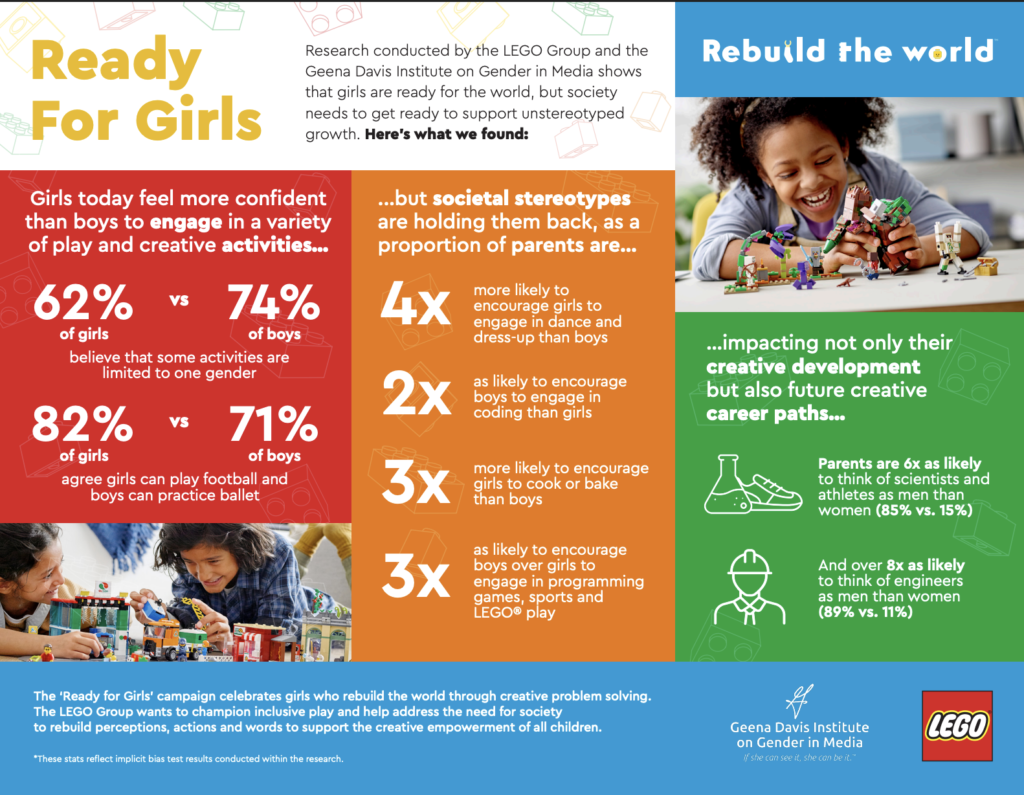
Here is what the data showed:
- Girls are outgrowing the stereotypes: Girls feel significantly less restricted by traditional biases than boys do. While 74% of boys believe certain activities are strictly meant for a specific gender, only 62% of girls agree.
- They are championing crossover play: 82% of girls believe it is completely okay for girls to play football and boys to practice ballet. Only 71% of boys felt the same way.
- Adults are the bottleneck: Despite young girls breaking down these barriers, parent perceptions are lagging. When asked to picture a creative professional (just like the exercise we did), parents overwhelmingly pictured a man, regardless of whether they were raising daughters or sons. They were almost six times more likely to think of scientists and athletes as men (85% versus 15%) and a staggering eight times more likely to picture an engineer as a man (89% versus 11%).
The campaign itself celebrates young women who are actively rebuilding the world through creative problem-solving. It is an incredibly inspiring initiative, and I highly recommend checking it out on the official LEGO site here: https://www.lego.com/en-au/aboutus/news/2021/september/lego-ready-for-girls-campaign
More than Perfect
I was so amazed by this research that I opened YouTube to watch the campaign video. When it ended, autoplay did its magic and queued up a different LEGO short film titled “More Than Perfect.”
That is exactly when my childhood disdain for LEGO finally started to click.
In the video, young girls are asked to build a playground out of bricks, but the adults explicitly tell them their creation has to be “perfect.” You watch these incredibly creative girls completely freeze up and freak out. I did not get those exact messages from my parents, but I definitely absorbed them at school. I remember struggling to draw a perfect square or a perfectly shaded still life of an apple. The frustration was paralyzing. I felt like if my work was not going to be flawless, it was not even worth trying.
As it turns out, I was far from alone. This video was the cornerstone of the 2024 LEGO “Play Unstoppable” campaign, backed by another massive global study. This time, they surveyed over 61,000 parents and children across 36 countries to understand how the pressure of perfection specifically impacts creative confidence.
Here is what the numbers revealed:
- Confidence plummets as girls grow: At age five, 76 percent of girls feel highly confident in their creativity. But as they get older, that number drops drastically. Eventually, two-thirds of all girls report feeling anxious about sharing their ideas.
Geena Davis Institute - Perfection is paralysing: A staggering 72 percent of girls experience anxiety about making mistakes. Parents see this happening in real time, with 71 percent agreeing that the burden of perfectionism actively holds girls back from developing their ideas.
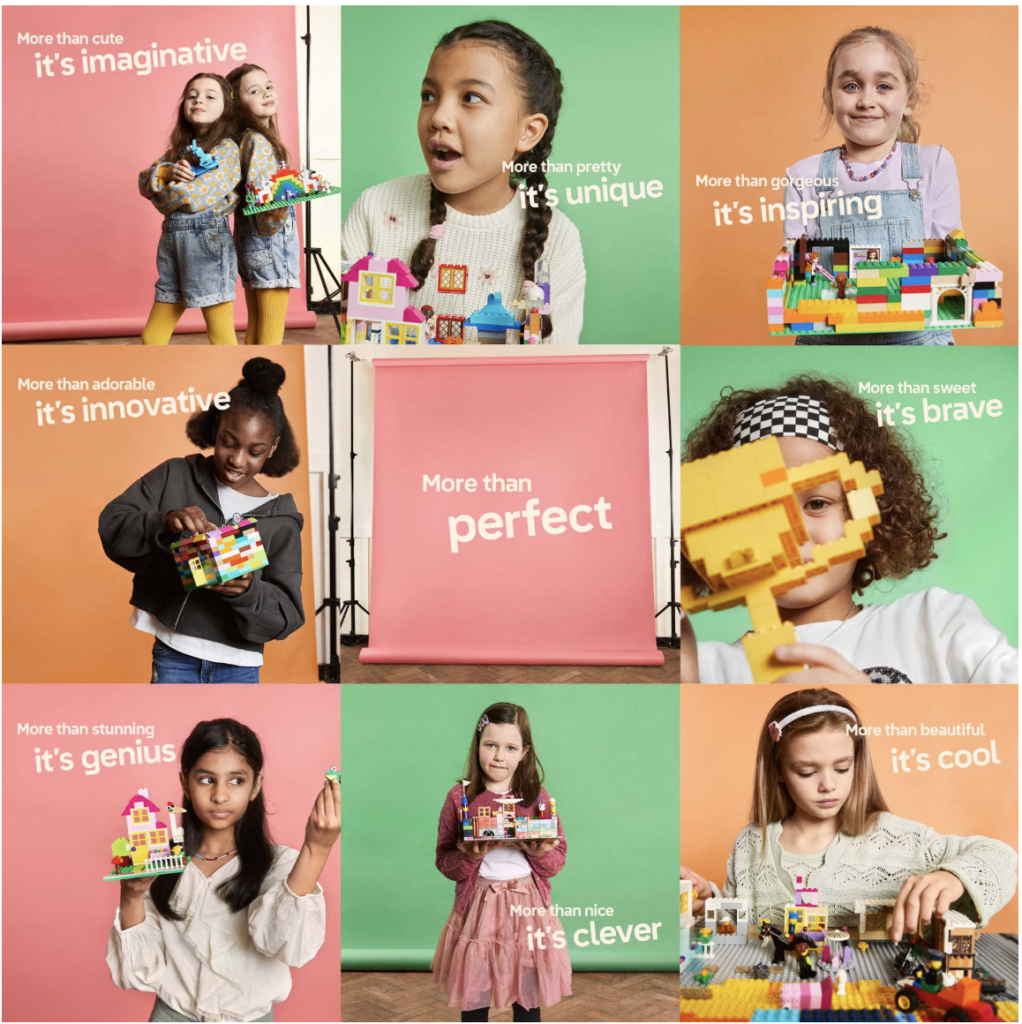
BricksFanz - Language is the culprit: The study found that society is seven times more likely to describe female creative achievements with words like “sweet,” “pretty,” or “cute.” Meanwhile, male creations are twice as likely to be called “brave,” “cool,” or “innovative.” This everyday vocabulary subtly reinforces the idea that girls should be pleasant and perfect, rather than daring and messy.
Medium
The solution is praising the process: The fix is actually incredibly simple. 80 percent of the girls surveyed said they would be far less afraid to try new things if their mistakes were praised as learning opportunities instead of failures.
If you met me now, you would probably think I create art all the time. But the truth is, I did not touch anything artistic from the time I was eleven all the way up until I was twenty-two. It took years to finally develop a growth mindset and start giving art a fair and imperfect shot again. And my journey was sparked by that exact same realisation: a professor telling me that there are no mistakes in art because it is an expression of the self, and the self can never be wrong.
I was so used to creating only to receive a good grade on an exam that I had completely forgotten the head, heart, and hand connection that LEGO so deeply advocates for. I forgot the pure joy of birthing something from your imagination into the real world, even if a little bit of perfection gets lost in translation.
The Fieldwork
Now convinced by these campaigns, I began to realize that maybe LEGO was just another one of those things I had convinced myself I could not be a part of, or that simply was not for me as an adult. I decided to go to the store, wanting to see exactly how they presented their mission and translate the ideals from their campaigns into a physical space. After all, there is no better way to back up research than to experience it yourself.
I was truly amazed. LEGO allows you to find your own meaning in what you build and what you see, and what I saw completely blew me away. So, I want to take you on a visual tour through some of the photos I captured at the Pitt Street store in Sydney, looking specifically at how they are building a new narrative around gender representation.
The Threshold


Standing outside the glass doors of the Pitt Street location, reading the words “Welcome to The World’s Largest LEGO Store,” I felt a mix of excitement and a tiny bit of that lingering childhood apprehension. But crossing that threshold felt like stepping into a completely different narrative than the one I grew up with.
The Rainbow Welcome
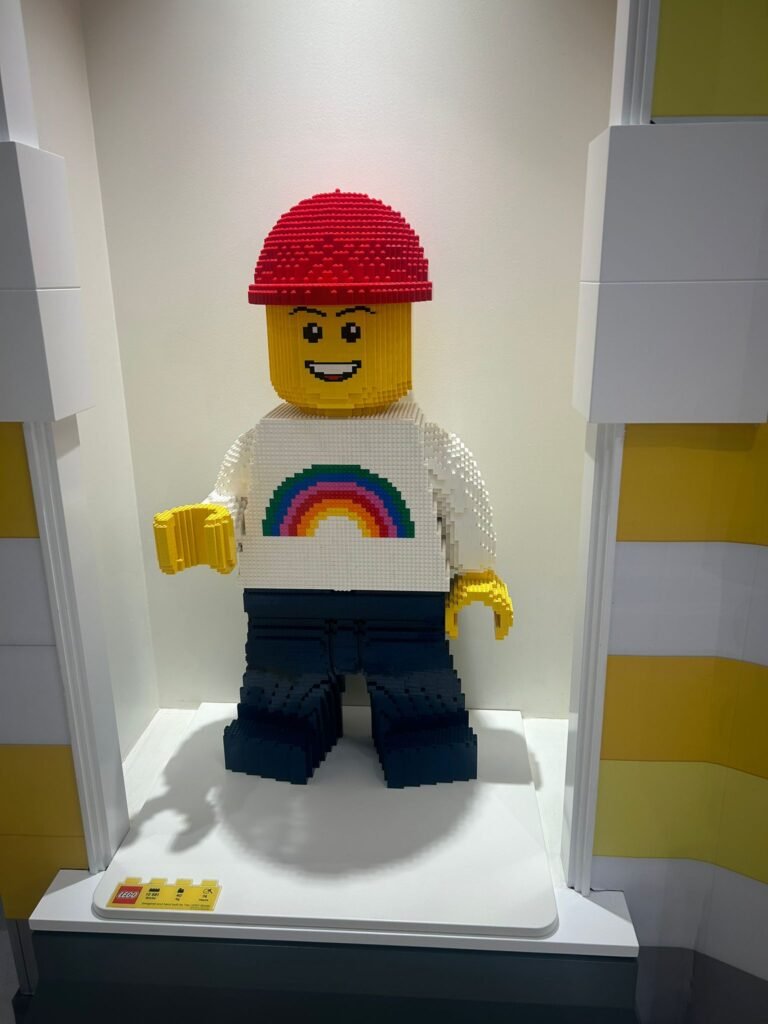
The very first thing you see when you walk inside is a towering LEGO figure wearing a bright red beanie and a rainbow shirt. What struck me immediately was the intentional lack of gender cues. This figure could be absolutely anyone. It does not dictate who is supposed to be playing, who is a builder, or who belongs in this space. It simply radiates a universal welcome. Seeing this as the very first touchpoint was a beautiful, physical validation of the inclusivity campaigns I had just spent hours researching.
A Robot in a Human Suit
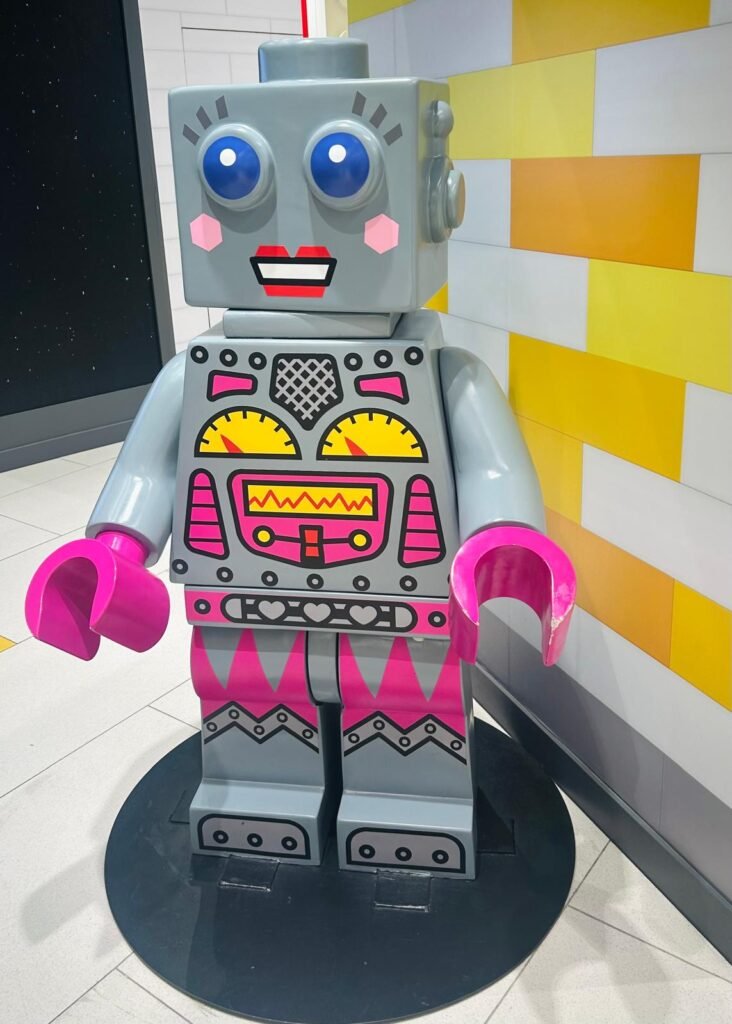
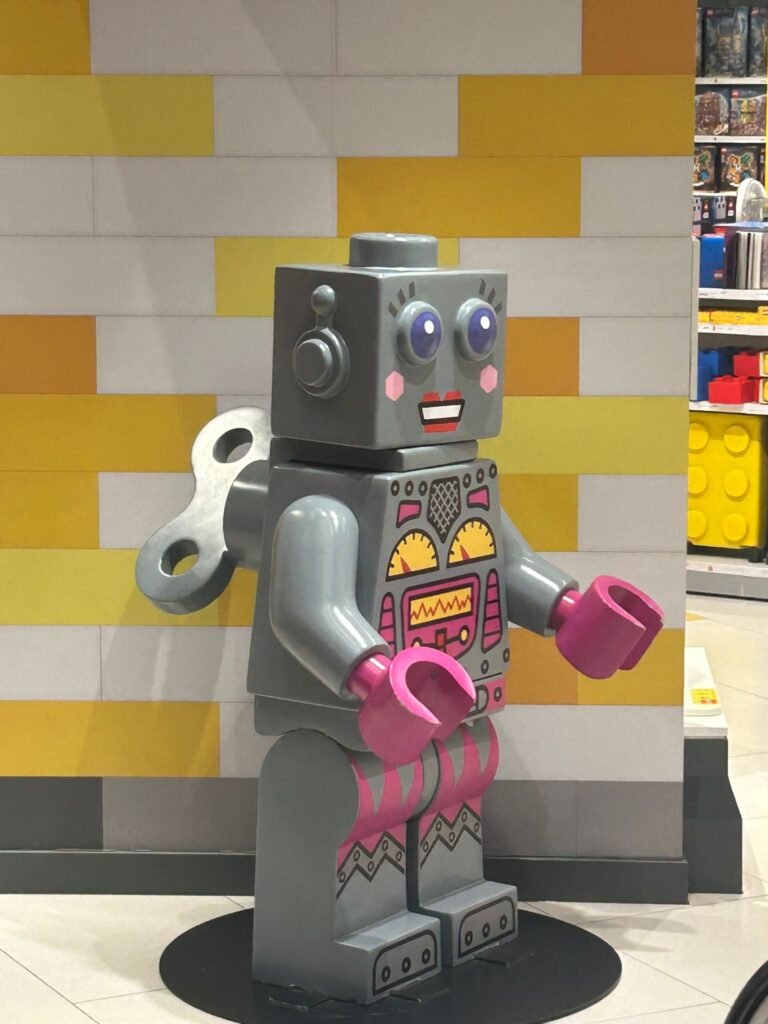
As I made my way toward the escalator to head upstairs, I was stopped in my tracks by a giant grey robot figure. At first glance, the robot is coded with obvious feminine cues: pink hands, pink trim, painted lips, and eyelashes. But the longer I looked at her, the deeper the commentary felt.
I was recently reading Dr. Devon Price’s book on unmasking autism, and a specific quote flashed in my mind the moment I saw this display:
“Of course, it is hard for me to carry myself in a ‘ladylike’ way, I am a robot in a human suit!”
This LEGO robot perfectly captures that exact sentiment. Look closely at her chest: there are rigid dials and meters. Look at her back: there is a massive silver windup key. For so many women, this is exactly what the performance of femininity feels like. We are taught to put on a pleasant face, perform the perfect polite greeting, and act ladylike, while internally feeling like a machine running on manual dials. We walk around performing for the world because there is an invisible key turning in our backs, wound up entirely by societal expectations.
Finding such a profound piece of psychological art on the ground floor of a toy store completely blew my mind. It perfectly set the stage for the story the rest of the store was about to tell me.
Ascending to the Harbour Bridge
As I made my way upstairs, checking the store map along the way, I was greeted by a massive, incredibly detailed build of the Sydney Harbour Bridge. But the true masterpiece was not just the architecture; it was the story being told by the characters actively building it.
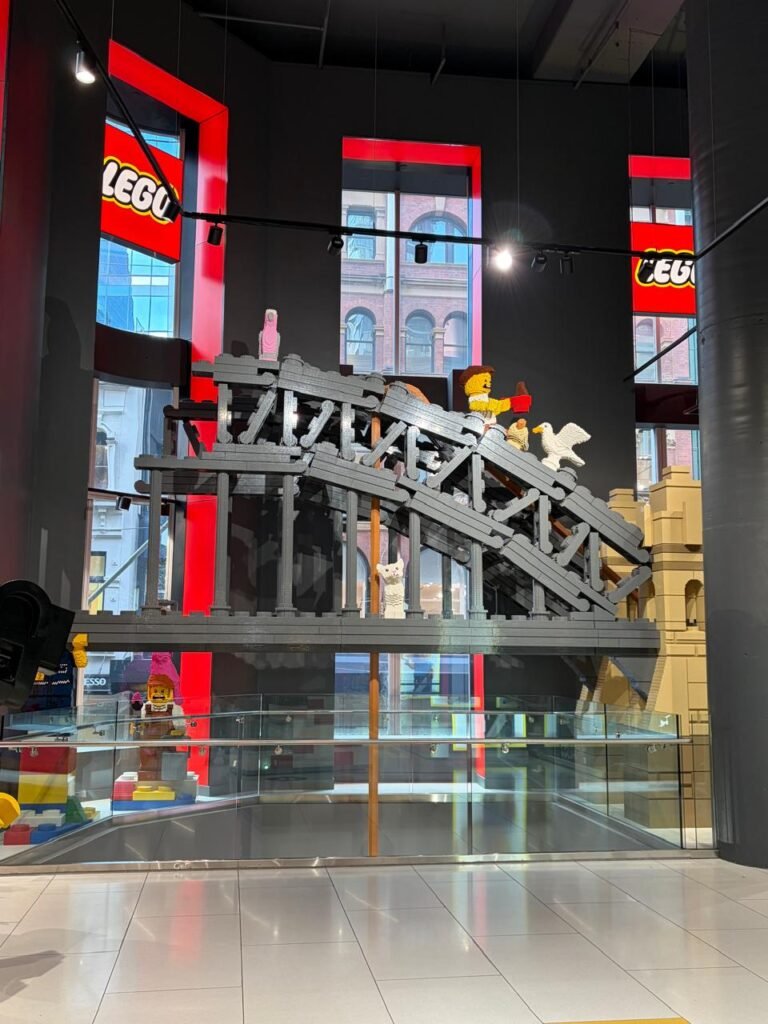
The Heavy Lifters
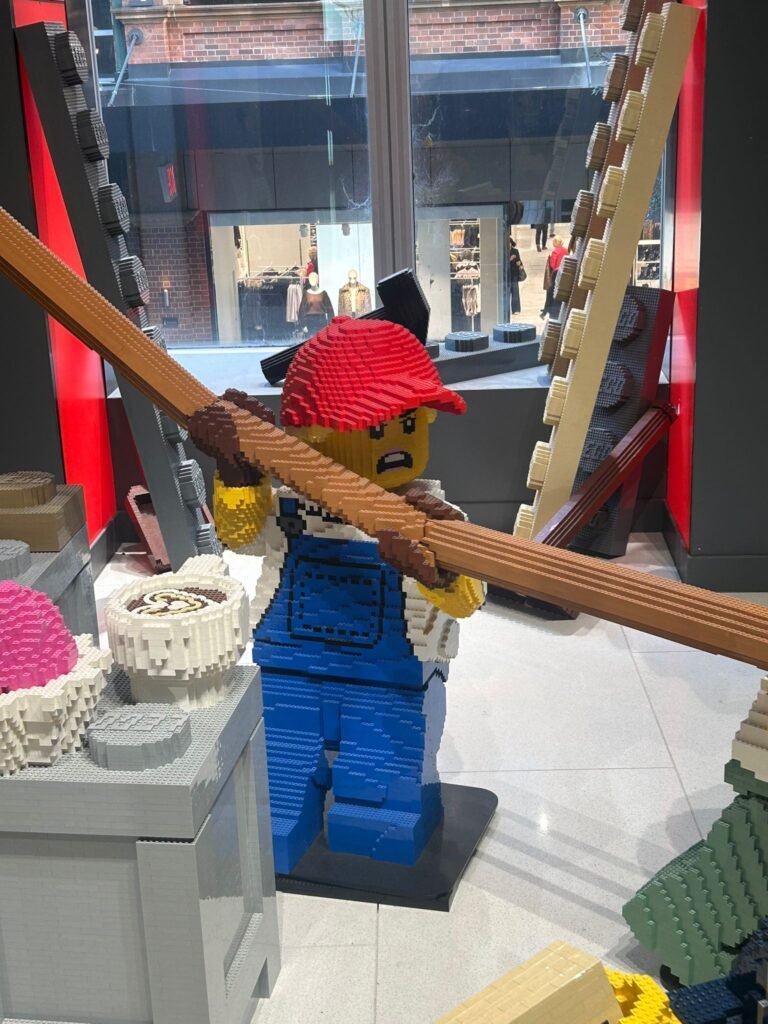
To the left side of the bridge, there is a figure in a red cap and blue overalls hauling a massive wooden beam. At a glance, your conditioned brain might assume who is doing the heavy lifting. But if you look closer, you see her lipstick and feminine features. What I loved most is that her body is completely ungendered, and she is dressed in perfectly appropriate, practical PPE for a construction zone. She is the one handling the hardest part of the job and carrying the literal weight.
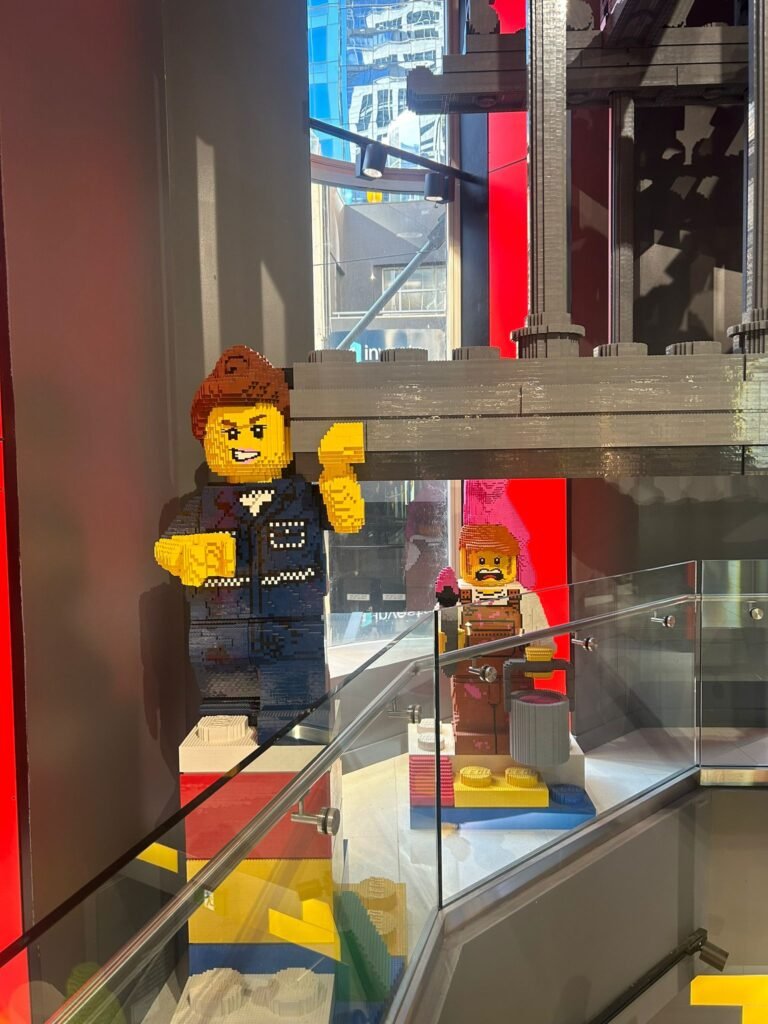
Subverting the Pink Expectation
In that same scene with the navy suit, you might notice a bright splash of pink paint. If you are anything like me, your brain might immediately, albeit unconsciously, associate that color with a female character. But look at who is actually in that scene. The pink paint is spilling directly onto a male worker, who looks completely shocked.
I stood there for a long time, just amazed by this setup. It was such a brilliant, subtle, and intentional subversion of everything we are taught to expect. The women are doing the heavy construction and structural support, and the man is the one covered in pink paint. It was the exact physical embodiment of the inclusivity research I had just been reading about, brought to life in the bricks right in front of me.
A Legacy of Representation
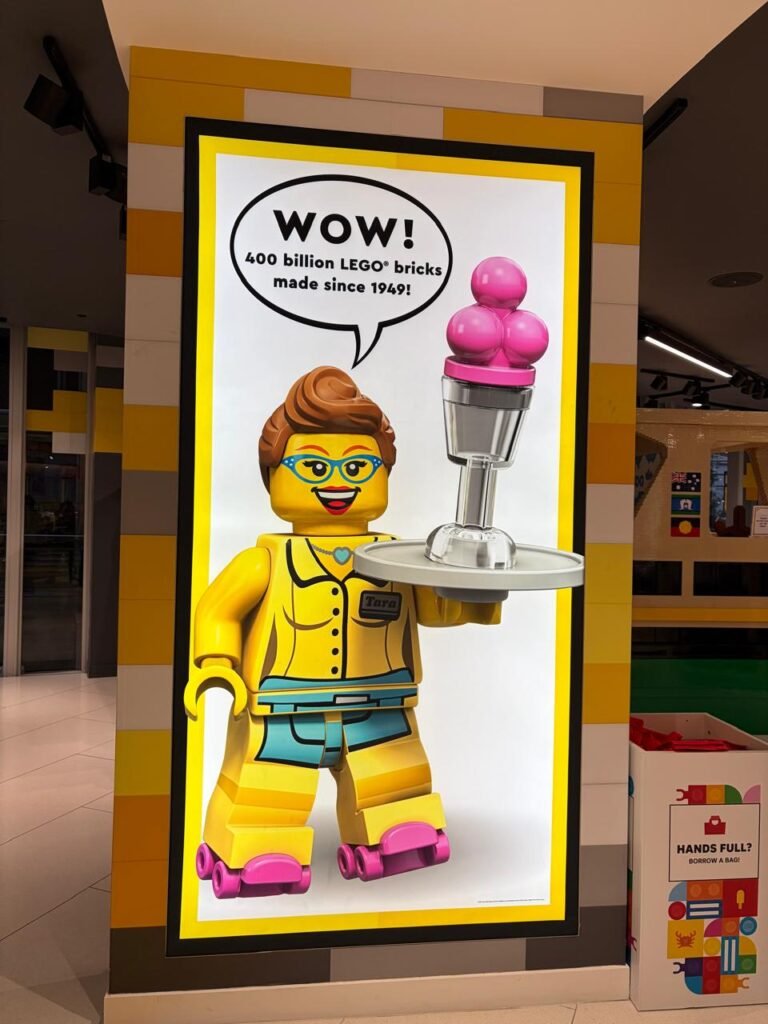
Standing there, taking in these incredibly intentional details, I began to wonder if this was just a recent marketing shift or if there was a deeper history of LEGO celebrating women in positions of power.
As it turns out (after taking a note on my notes app to look into this later) , the core ethos of equality has been built into the brand for decades. As far back as 1974, LEGO included a bold letter to parents in their packaging. Long before modern gender discourse, the company wrote: “The urge to create is equally strong in all children. Boys and girls… A lot of boys like doll houses. A lot of girls prefer spaceships. The most important thing is to put the right material in their hands and let them create whatever appeals to them.”
While they definitely stumbled over the years as the toy industry became heavily gendered, they have actively course-corrected to honor that original 1974 promise. In 2014, they released the Research Institute, a set entirely dedicated to female scientists. A few years later, in 2017, they launched the monumental Women of NASA set, celebrating true pioneers like computer scientist Margaret Hamilton and astronaut Mae Jemison.
What I was seeing at the Pitt Street store was not just an ad campaign. It was the physical manifestation of a historic brand actively remembering its own roots and putting women back in the driver’s seat. Or in this case, putting them back in the heavy-lifting gear as well.
Everyone is Awesome
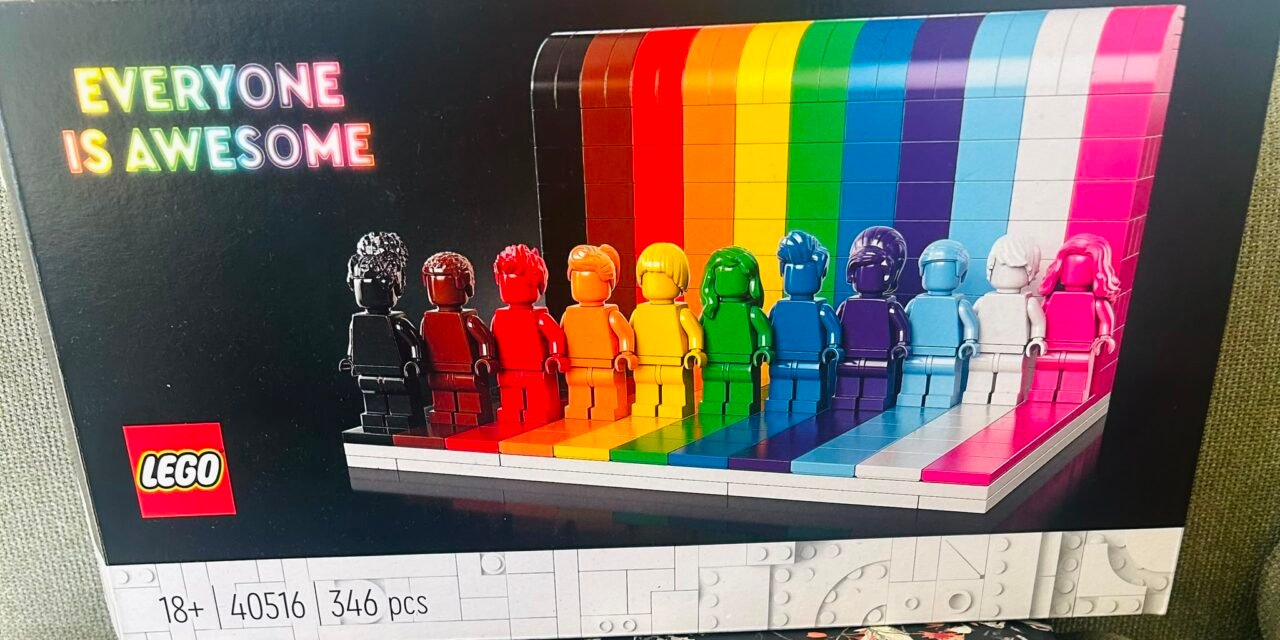
After being thoroughly amazed by the displays upstairs, I walked over to the checkout to grab some gifts for friends and family. Right by the register, I stumbled upon a set called “Everyone is Awesome.”
It was a total last-minute impulse purchase, but I absolutely had to do it. After the morning I had just experienced, I realised something: I was still buying LEGO for everyone else and not for myself. So, I decided to buy the set and actively push myself to do exactly what LEGO wishes for us to do as adults. I was going to build.
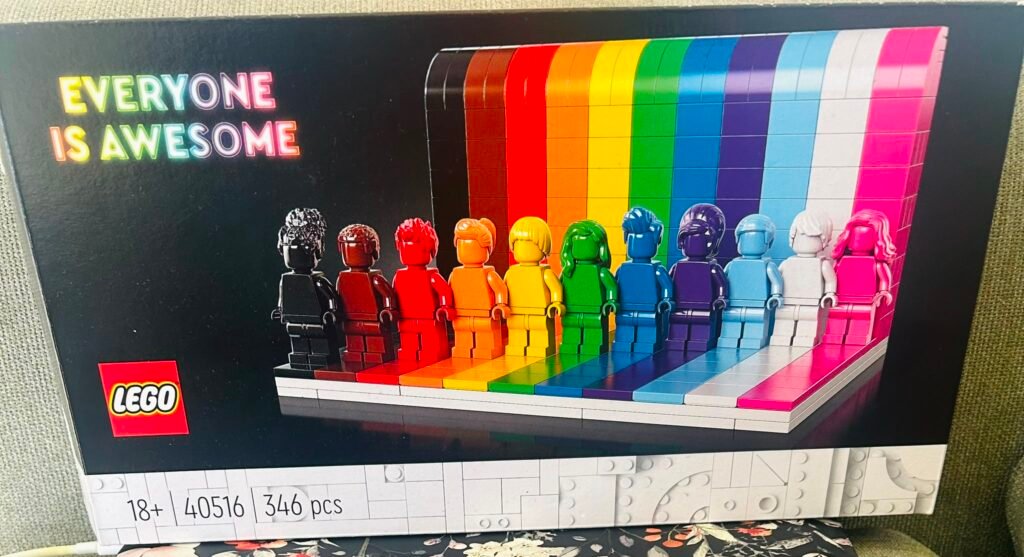
The Rorschach Test
Thankfully, they included a guidebook, which made everything significantly easier for my spatial awareness! I started by building the monochrome people. Naturally, I got completely sidetracked from building the actual project and just started creating a bunch of random, funny scenes with the figures instead.
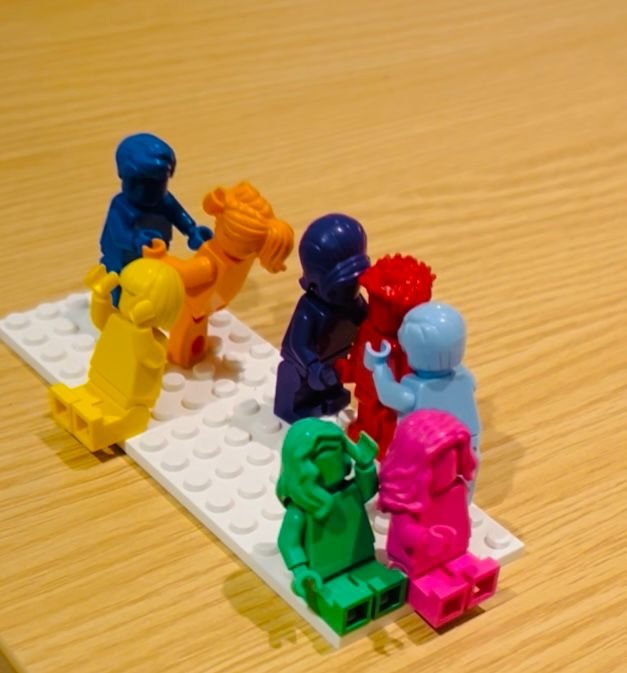
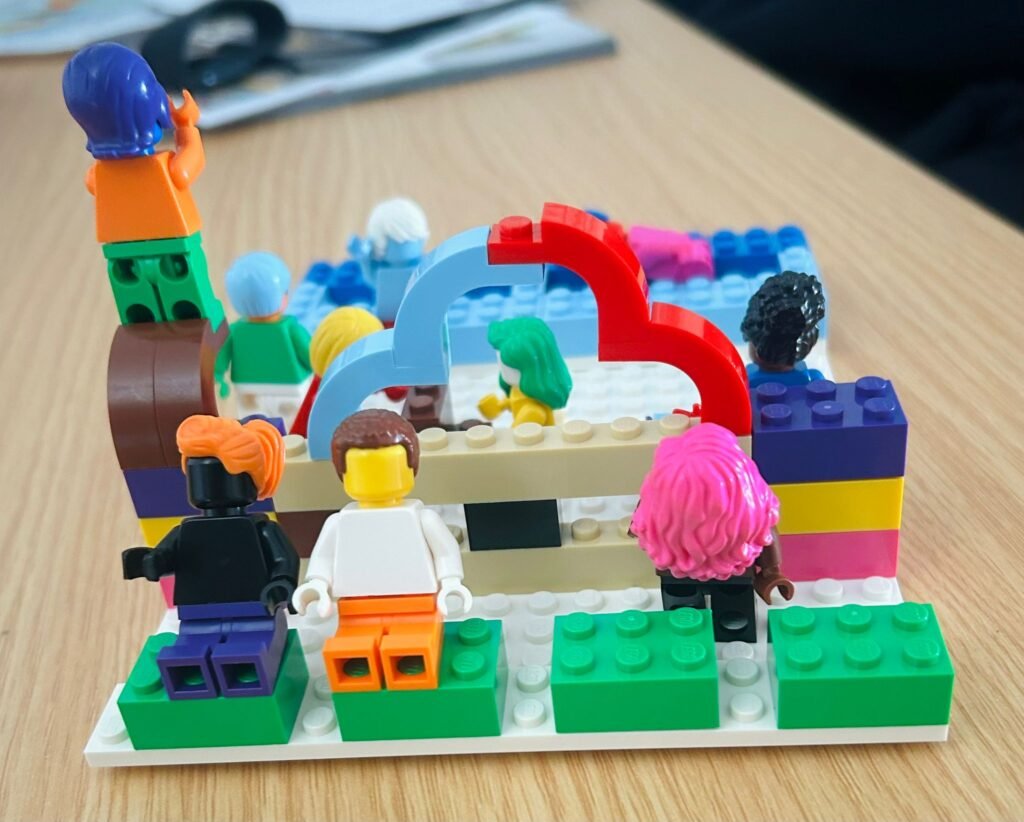
I was having so much fun that these little scenes essentially became a funny Rorschach test. I started sending pictures of my setups to my friends and family just to see what they saw in them. The stories they came up with were endless and hilarious, and it amazed me how deeply our own perceptions influence what we see in a piece of art.
The Real Story Behind the Set
While I was showing off my new set, a girl I coach asked me if it was from The LEGO Movie. It is a fair guess, given the famous song “Everything is Awesome” from the film, and the fact that the set designer actually worked on that movie! But the true history and intention behind this specific set is so incredibly beautiful and profound.
The set was created by Matthew Ashton, the Vice President of Design at the LEGO Group. He originally designed it just for his own desk to reflect his pride in being part of the LGBTQIA+ community. He grew up in the 1980s, a time when being a gay kid was incredibly scary, and he was constantly told what he should and should not play with. He created this set because he wished that, as a kid, he had seen a clear, inclusive statement that said “everyone is awesome” and that there was a safe place for him in the world.
He wanted to make sure that anyone coming out, or anyone just feeling different, knew that somebody had their back. The colors celebrate the broad diversity of the LGBTQIA+ community, but the message is universal. The campaign’s tagline is: We want to help create a world through LEGO® play where everyone is welcome and valued.
It was the absolute perfect conclusion to my journey. What started as a Google search about gender campaigns ended with me sitting on my floor, building with brightly colored bricks, and finally letting go of the need for everything to be perfect. Because after all, the joy is not in building something flawless. The joy is simply in being allowed to build at all.
We all have the right to be accepted, to be loved, and to be creative.
I hope that I get to finish building my set soon! To everyone out there, keep playing and keep building!