The Premise
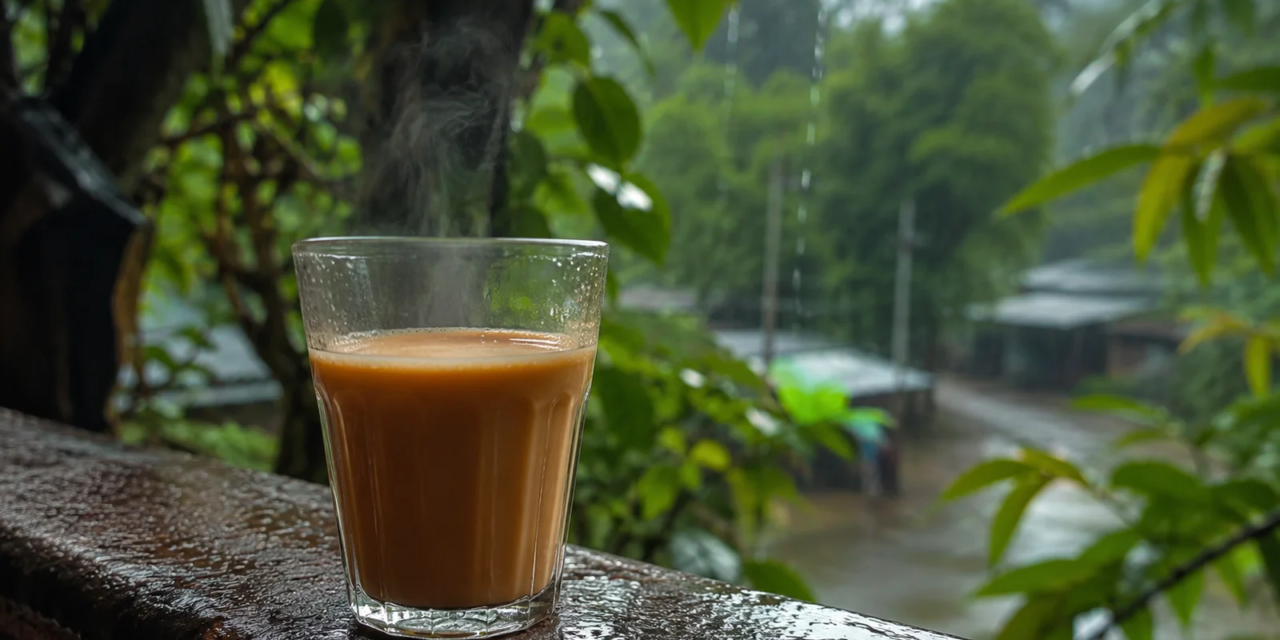
A cup of hot tea sitting on the window sill on a rainy day. What memories does this evoke? We, at WWeaV invited stories for this picture for the pilot edition of our contest ‘Our Picture, Your Stories’. We received a lot of entries.. some poems too. The prizes are sponsored by Teas for Wildlife. These are some that we loved!
Brewed With Assam’s Heritage
By Namrata Sarmah
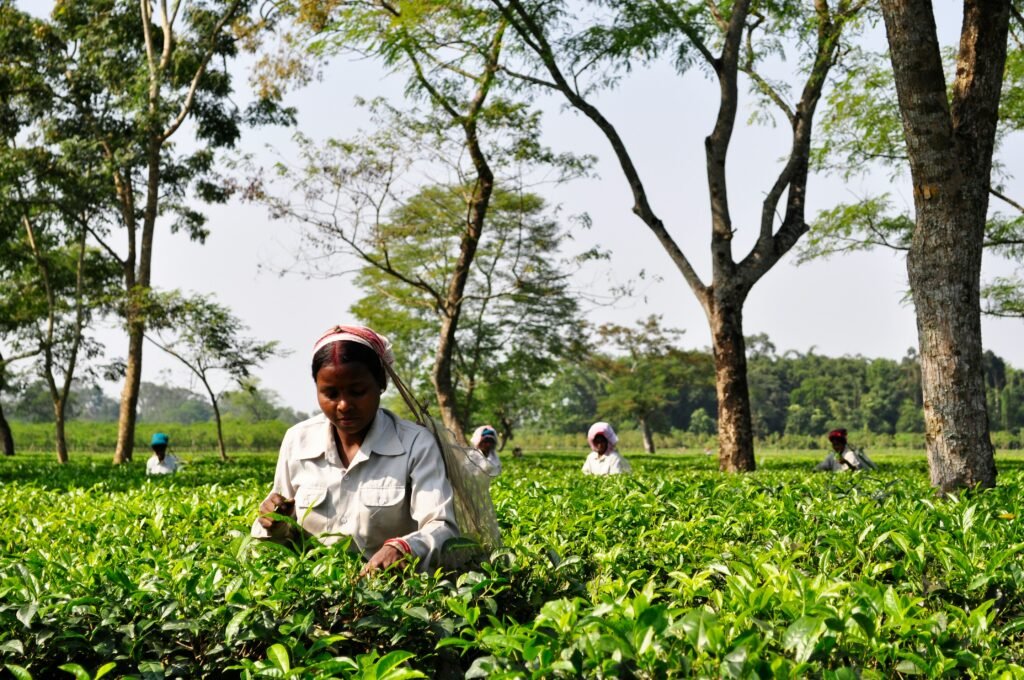
In the heart of Assam, where tea leaves sway,
Nature whispers at the break of day.
Every garden blooms with emerald grace,
A peaceful smile on the earth’s embrace.
A steaming cup in gentle hands,
Carries the soul of Assam’s lands.
Rich in aroma, bold in taste,
A treasure that should never be wasted.
When raindrops dance, and cool winds blow,
A cup of chai makes happiness grow.
With crispy pakoras by its side,
Every rainy moment fills with pride.
Tea is more than just a drink,
It’s comfort, joy, and time to think.
It warms the heart, it calms the mind,
Leaving every worry far behind.
From Assam’s fields to every home,
Its timeless flavor continues to roam.
One sip, one smile, one memory to keep—
Assam Tea is a promise, rich and deep.
“No rainy day is complete without a cup of Assam Tea. Every sip tells the story of nature, warmth, and home.”
Tea – High on Spirits
By Dr Salla Vijay Kumar
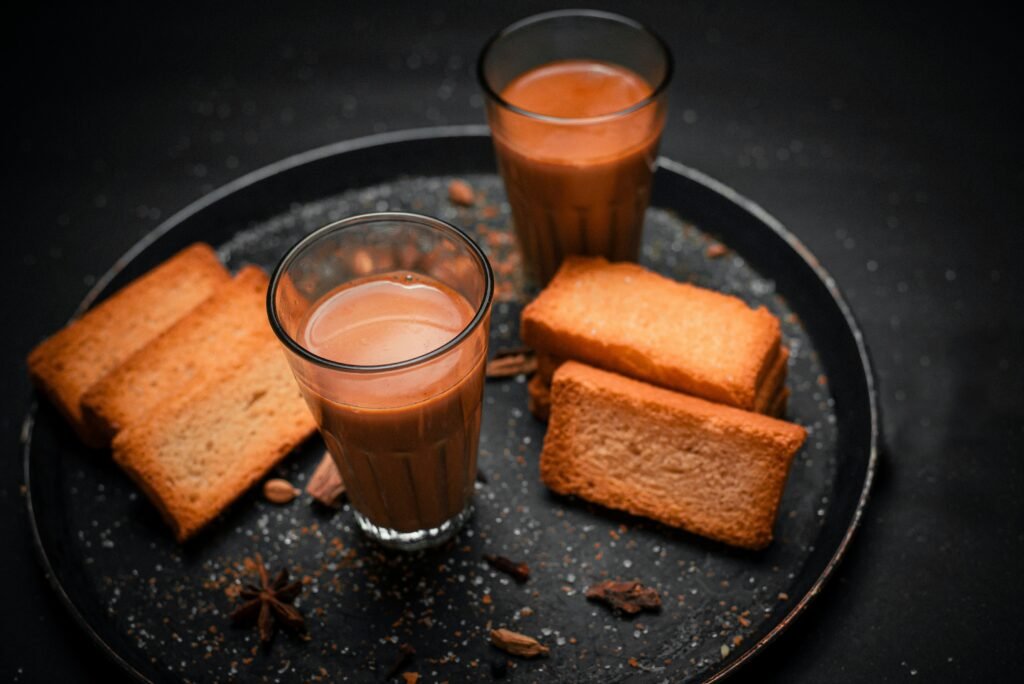
Tea is far more than a beverage; it is an emotion that transcends geography, culture, age, and social boundaries. While often romanticised as a companion to monsoon showers or quiet evenings, tea embodies a much deeper significance. It is a silent witness to conversations, celebrations, reflections, and relationships. Whether enjoyed amidst the rhythmic sound of ocean waves, the gentle chorus of birds at dawn, or in the midst of a bustling workplace, tea possesses an extraordinary ability to create moments of connection and calm.
Throughout my personal and professional journey, I have shared countless cups of freshly brewed tea with family, friends, colleagues, students, travellers, and even strangers. These encounters have occurred in homes, offices, railway stations, roadside stalls, boardrooms, and leisure destinations. Irrespective of the setting, tea has consistently served as a common denominator that dissolves barriers and initiates meaningful conversations. It is remarkable how a simple cup can transform unfamiliar faces into companions, even if only for a fleeting moment.
For many, tea is a daily ritual; for others, it is a source of comfort, a stress reliever, or even a therapeutic habit. Some begin their day with it, while others seek it during moments of fatigue or contemplation. Across generations and communities, tea has earned the status of a universal motivator—one that rejuvenates the mind, refreshes the body, and uplifts the spirit. Its appeal is neither confined by religion, region, language, nor social status. Instead, it unites people through a shared experience of warmth, hospitality, and belonging.
In an era increasingly defined by digital interactions and hurried lifestyles, tea offers something profoundly human—the opportunity to pause. It invites us to slow down, listen, converse, and appreciate the presence of others. The conversations that unfold over a cup of tea often become more memorable than the beverage itself. Relationships are nurtured, ideas are exchanged, and moments of empathy emerge in the most ordinary settings.
Perhaps the true essence of tea lies not in its aroma, flavour, or brewing technique, but in its remarkable capacity to foster human connection. A shared cup often leaves behind memories that endure long after the final sip, reminding us that life’s simplest rituals frequently hold the greatest meaning. Tea, therefore, is not merely consumed; it is experienced. It rejuvenates, inspires, comforts, and quietly strengthens the invisible threads that bind people together. In every cup resides an invitation—to connect, to reflect, and to celebrate the enduring spirit of togetherness.
The Cup That Changed Everything
By Shailesh Maheshgauri
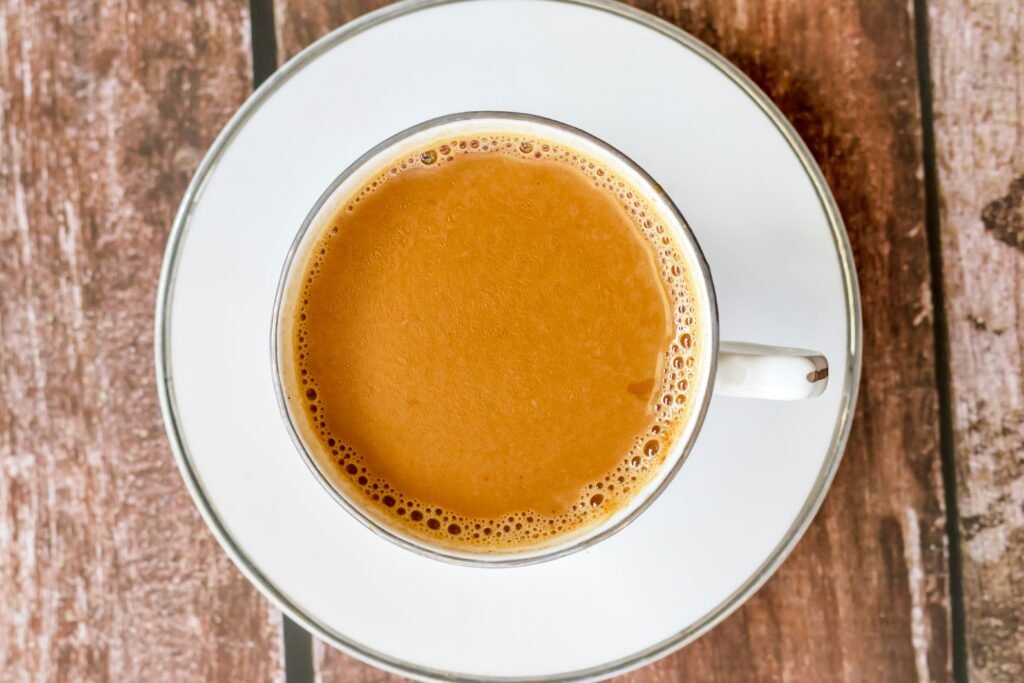
Some cups of tea are forgotten within minutes. Others stay with you for a lifetime.
My younger brother had just graduated as an engineer and joined the government as an Electrical Engineer. His very first posting was in our father’s native village. Coincidentally, the Village Incharge was my father’s childhood classmate.
Within just a month of joining, my brother’s sincerity, hard work, and dedication won the respect of everyone in the village. Impressed by his work, the Village Incharge invited my brother and my father to his home for tea and snacks.
When they returned, I noticed something unusual. My father was quiet. His eyes were moist, and he seemed lost in thought.
I asked him, “What happened?”
He paused for a moment and replied, “Today, I drank the most memorable cup of tea of my life.”
Then he told me a story I had never heard before.
As a young schoolboy, he often visited this same friend’s house. But in those days, because our family belonged to a lower caste, he was never offered tea in the same cups as everyone else.
Instead, there was a single old cup with a broken handle and a chipped rim. It was always kept separately on the corner of a window.
That cup was reserved for him.
He never questioned it. Society had taught people that this was normal.
Years passed. The boys grew up, built their own lives, and the world slowly began to change.
And then came that afternoon.
When my father entered the same house after decades, no one looked for the old broken cup. Instead, they opened a brand-new crockery set and served tea to both my father and my brother in beautiful new cups, with warmth, respect, and pride.
The tea probably tasted the same.
But the feeling was completely different.
For my father, that cup held far more than tea. It held dignity where there was once discrimination. It held acceptance where there had once been separation. It reflected a society that, though still imperfect, had learned to see people beyond their caste.
As he finished telling me the story, he smiled through his tears.
That day, my father didn’t just drink tea.
He tasted equality.
And I realized that sometimes, the most powerful revolutions don’t arrive with loud slogans or grand speeches.
Sometimes, they arrive quietly… in a simple cup of tea.
My First Cup of Tea
By Antara Khatav
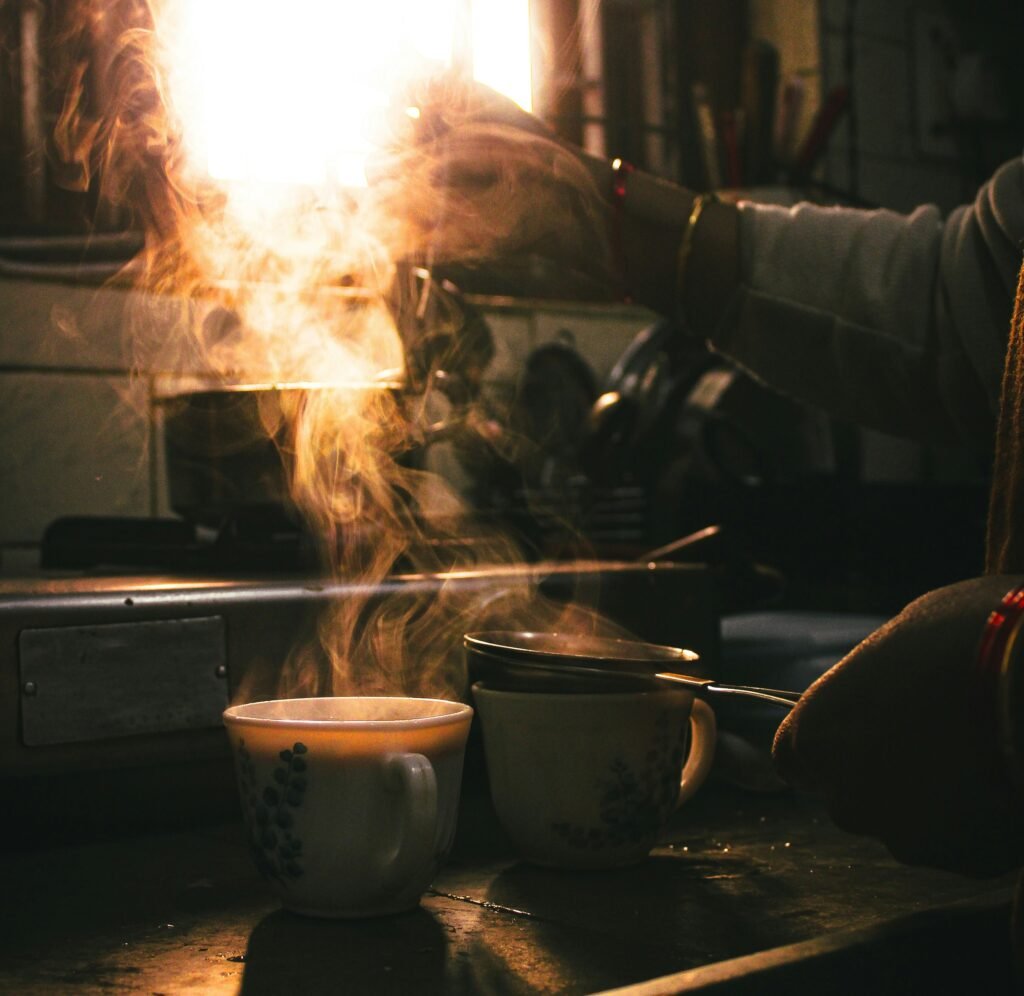
Tea is a very emotional subject to many people. Some are addicted to it and some just enjoy the energy it provides. For some select others, its smell is more mesmerising than its taste. I count myself in the latter category. My first Cup of Tea came during a monsoon evening, sitting amongst my family. Tea, especially one made by my mother, holds a special place in my heart. The soft boiling of flavorful water, the aroma spreading in the air, the mist coming through the window and the pitter patter of rain. It certainly makes me wonder if heaven can be found on earth. The boiling of tea leaves, some grated ginger within, the right amount of sugar and the dash of milk creating the perfect cup. Motherly warmth and love seeping into every sip of the ethereal liquid sending a wave of bliss through every nerve in the body. Piping hot tea sitting in the balcony with nature singing tunes around me sounds divine.
Jaipur Tea Memories
By Sanvi Bhalla
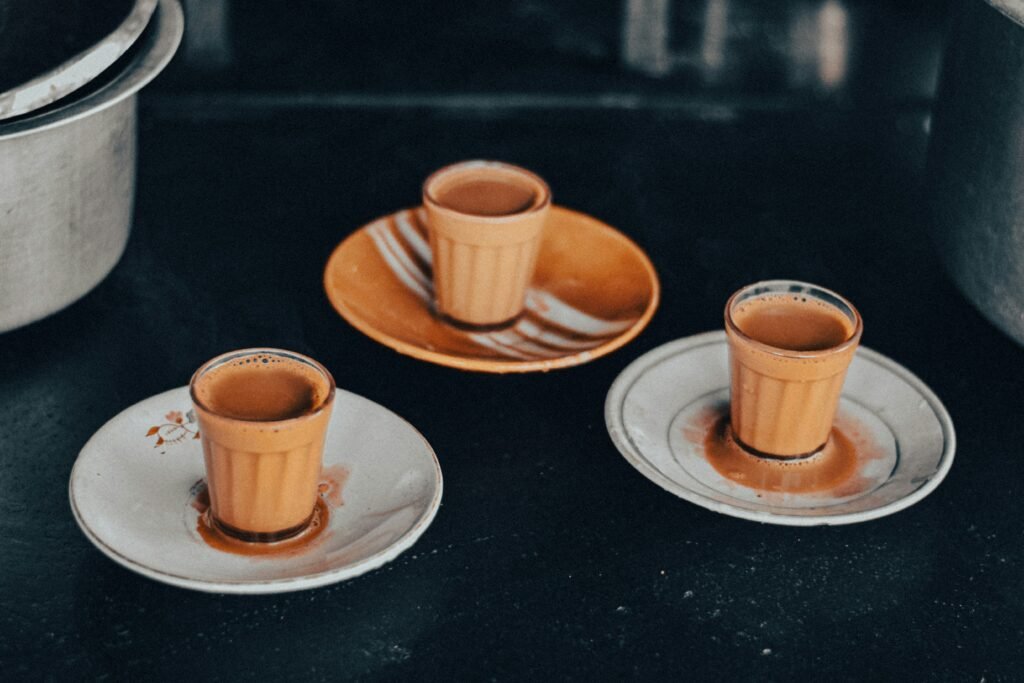
Whenever Jaipur got a real monsoon, . the kind heavy enough to flood the lanes and send the peacocks screaming off the rooftops. My mother would look out the window, look at me and my sister, and say nothing. She didn’t need to. We were already out the door.
Running straight into it. Cycling around the colony, splashing through puddles, arms out like the rain was something you could hold. By the time we came back, we were soaked to the bone, hair plastered flat. Shivering and grinning like we’d gotten away with something. And that was always the cue for my mother to start the tea. Water was first set to boil, then the tea leaves were added letting them open up. Then milk was poured in slowly. And then the part that made it hers — adrak crushed in, a little kali mirch, a pinch of elaichi, all of it going in one after another letting the aroma rose and spread in the whole house.
Me and my sister after a long hot shower, sitting all hungry and tried ready to doze off and movement. End our day by the same window, cup in hand, Maggie on the side steam rising off the bowl the way it rose off the tea.
Recalling the same memories – Who fell off their cycle, Which splash was the best and which photo is the funniest.
I’m in Gujrat now, in a hostel room, few states and a night long train ride away from that window. Every time it rains hard here that memory comes back uninvited. I still sit down by the window to watch the rains closely followed by the tea and Maggi. But the window is now replaced by hostel window, cup by hostels tea that tastes nothing like home and the Maggie by cup noddles. It isn’t the same tea. It’ll never will be. But for minutes, a cup away from home, trying it’s best to remember a house that isn’t a run away and a phone full of memories is enough to live those moments again.
Spilled Tea
By Arnika Chauhan
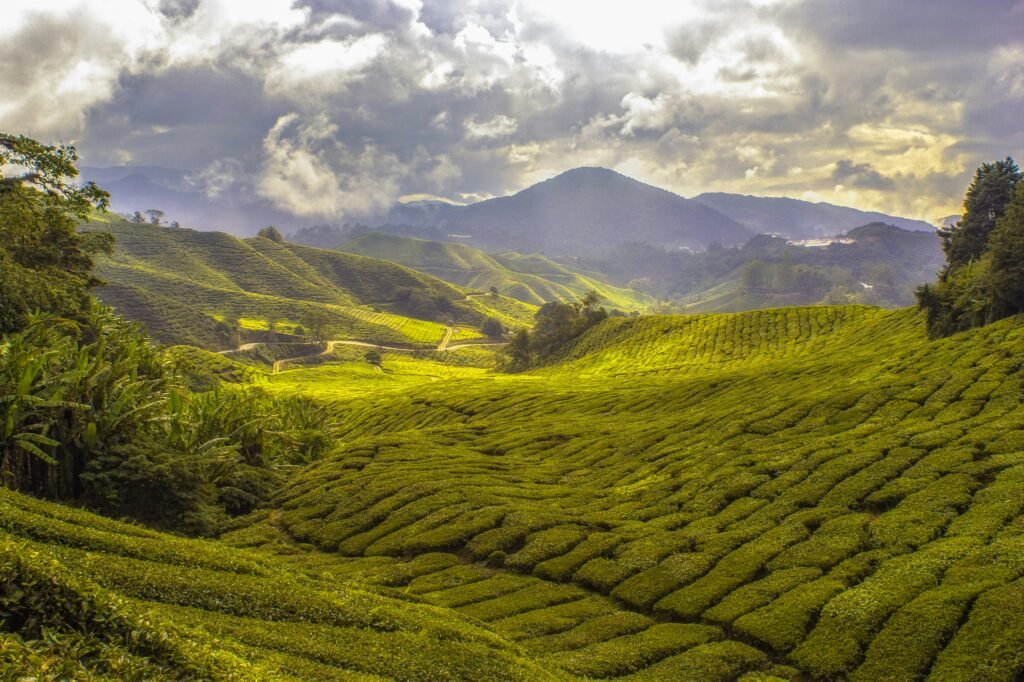
Faint notes of grass, strong flavour of the soil by it.
She could smell them all sitting by the window sill.
She heard the sounds of kids laughter, the memory of her childhood gleamed.
Her childhood where she screamed and screamed. Not knowing if it was all a dream or real.
When it poured and drowned, when it rained like pins falling, all she heard was the sound of the paired horrendous laughter.
She danced and dreamed it was all a dream, where she had woken up to the arms of thee.
She was fed on soil, she was fed on rain.
She had to have it in her brain that they were the part of her grain.
She knew them all but she saw them none.
She felt it all yet she saw it none.
Now she sits at her window sill, waiting for her cup of tea to spill. She swallowed the huge lump of hill.
She smiled looking up at the rain,
Droplets filling the hollowness of her eyes.
She smiled she smiled feeling the hike of the sky.
Oh, she smiled she smiled as the crew of crows cried.
She smiled as she felt her arms go bland,
She danced as she felt her smile go numb,
She smiled as she danced in the rain for last,
Falling in the arms of thee in a blast.
A Dirty Chai Latte with Soy
By Pratishtha Natarajan
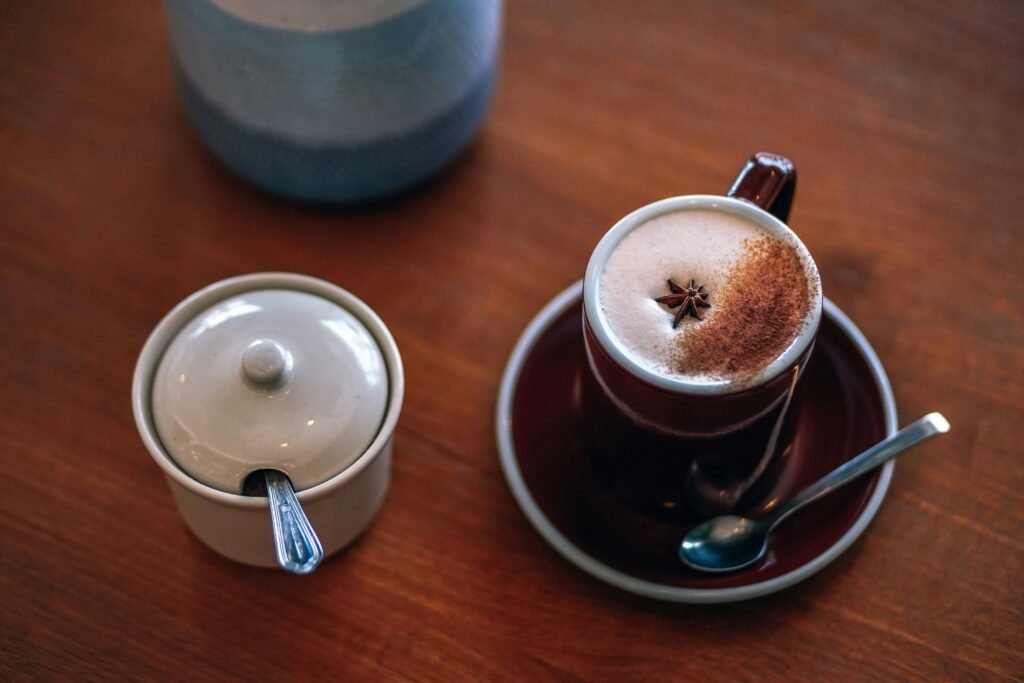
I will have a dirty chai latte with soy milk, please. I remember saying this as I stopped by a modern cafe with indoor plants in a shopping center. I was with my friend who had a fondness for chai. Traditional. Exactly the vibe of this picture. As you can imagine, he burst out laughing.
I feel weird saying this to Indian people, but I never really drank chai. I loved it for the Parle Gs I got to dip in it and the flavor and texture of the soggy biscuits. But when it came to the actual tea? Count me out, please.
And then came adolescence, unrealistic body standards, and the demonisation of dairy and fats. I completely switched to nondairy beverages like soy and oat, and only drank unsweetened herbal teas and black coffee. Chai wasn’t a part of it. A good cup of pure Darjeeling, yes.
I remember internally scoffing at my friends in the United States when they used to order dirty chais, or chai tea lattes with soy. I had the natural reaction any of us would. But one day, my friend offered me a sip of her dirty chai, and I was transmuted. It didn’t taste anything like you would expect the chai in this picture to taste like, but the vibe was exactly the same. The comforting nutmeg, the bitterness of the coffee, the cardamom, the ginger, and the creamy soy.
I felt like the dirty chai latte with soy milk captures the complex intersections of my identity. A gentle contradiction wrapped in warmth. It is the bridging of two worlds. The traditional spice of heritage meeting the modern adaptations of a life lived across cultures. It is comfort found in an unexpected cup on a rainy day, proving that sometimes the things we resist are the exact pieces that help make us whole.
The Chair No One Sits In
By Saurabh Aroraa
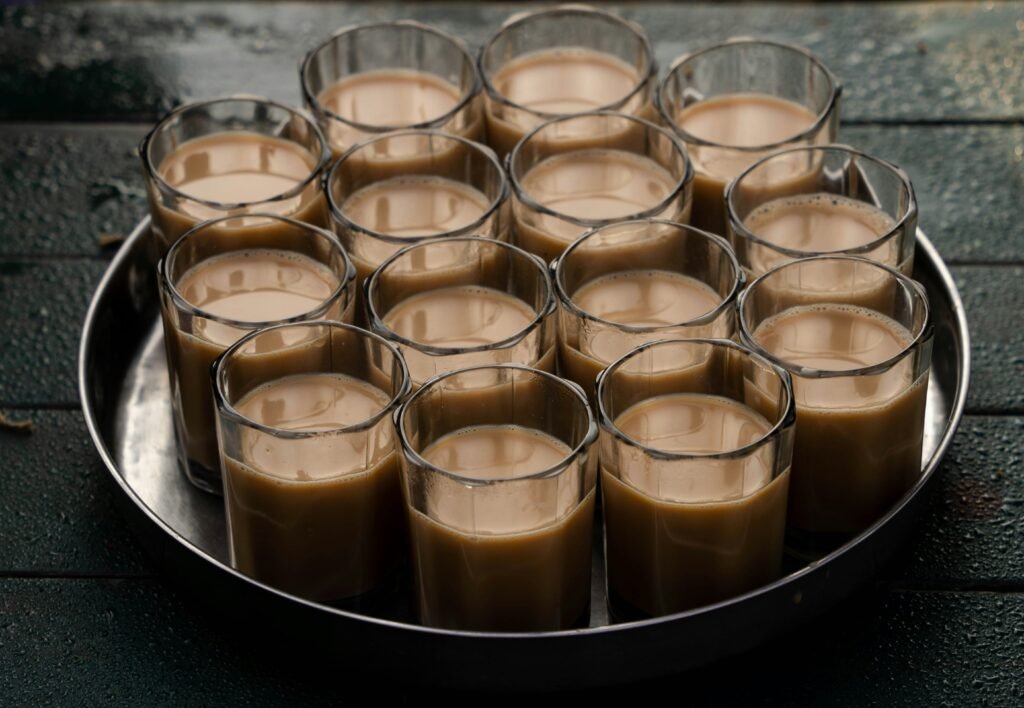
I never drank tea. Even as a boy, I’d wrinkle my nose at the bitterness and slip away. But I never missed tea time. Not for the tea, for what it did to my family.
My father was a government doctor, posted city to city, his job pulling us far from the village. So we lived apart most of the year, and only twice, one summer, one winter, did we all come home. Twenty of us under one roof again, plus the big functions no one dared skip. And every evening of those precious weeks, at five o’clock, ‘Baba’, my grandfather, cleared his throat from the veranda, and the whole scattered family folded back into one.
The tray came out. Steam rose from a dozen small glasses. And they talked. God, how they talked, about crops, about weddings, about arguments twenty years old that still made them wheeze with laughter. As a child I’d sit on the floor by Baba’s feet, the only one without a glass, drinking something better than tea: the sound of everyone I loved, in one place, at one time.
Baba always saved the last of the talk for me. “And you, chhotu, what did you learn today?” As if my small day mattered as much as the harvest. Even after I’d grown, moved away, built a life of my own, he’d ask me the same thing every visit.
He passed away when I was well into the middle of my own life.
The first tea time after, no one spoke. The tray still came. My grandmother’s hands wouldn’t let it not, but Baba’s chair sat empty at the head of the veranda. All of us gathered, and only the sound of glasses set down too gently. Then my eldest uncle cleared his throat. That same rough sound, and slowly, like water finding its level, the talking began again. Softer. But it began.
We never let anyone sit in that chair. As long as it stayed his, tea time stayed whole.
I still don’t drink tea. The family has scattered further now; into flats, into phone calls. But at five o’clock, something in me still turns toward that veranda, that tray of steam, and a chair no one sits in, still holding its place at the head of everyone I’ve ever loved.