















Why the New Autistic Barbie Matters
The Permission to Unmask: Why the New Autistic Barbie Matters
A look at how a doll is teaching the world to value accommodation over assimilation. A Blog by Pratishta Natarajan.
My First Thoughts
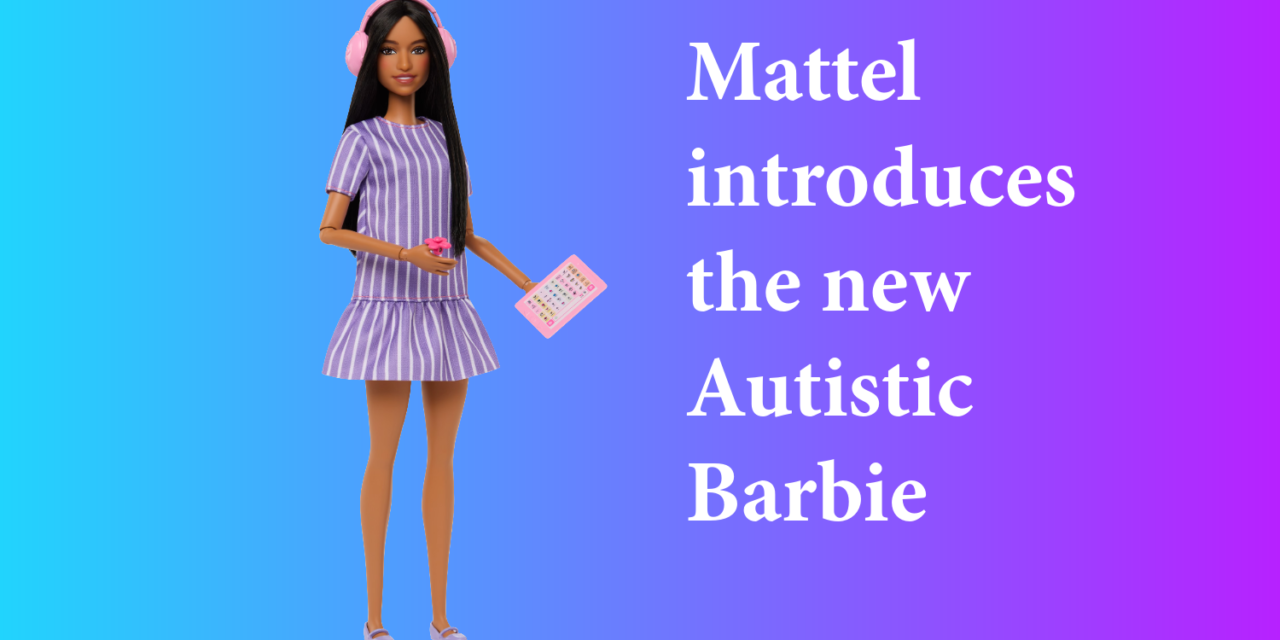
On January 12, 2026, Mattel released its first autistic Barbie doll. When I first heard the news, my immediate reaction was curiosity: How do you make an “invisible disability” visible without stereotyping?
In my eight years of working with neurodivergent youth, I have learned that there is no single “look” to autism. If you’ve met one autistic person, you’ve met one autistic person. So, how do you capture that in plastic?
I was surprised by how Mattel did it. They didn’t design a caricature; they designed a lesson in acceptance. They shifted the focus from what autism looks like to what an autistic person needs.
Why a Female Doll is Revolutionary
The fact that this doll is a woman is, in itself, a quiet revolution. Statistically, boys are diagnosed with autism about four times more often than girls. This isn’t necessarily because autism is rare in girls, but because girls are often better at “masking” their traits or are misdiagnosed with anxiety because they don’t fit the standard “boy” profile.
By choosing a female doll as the face of this launch, Mattel is signaling to the world: Look for us here, too.
The Polished Aesthetic vs. The Reality
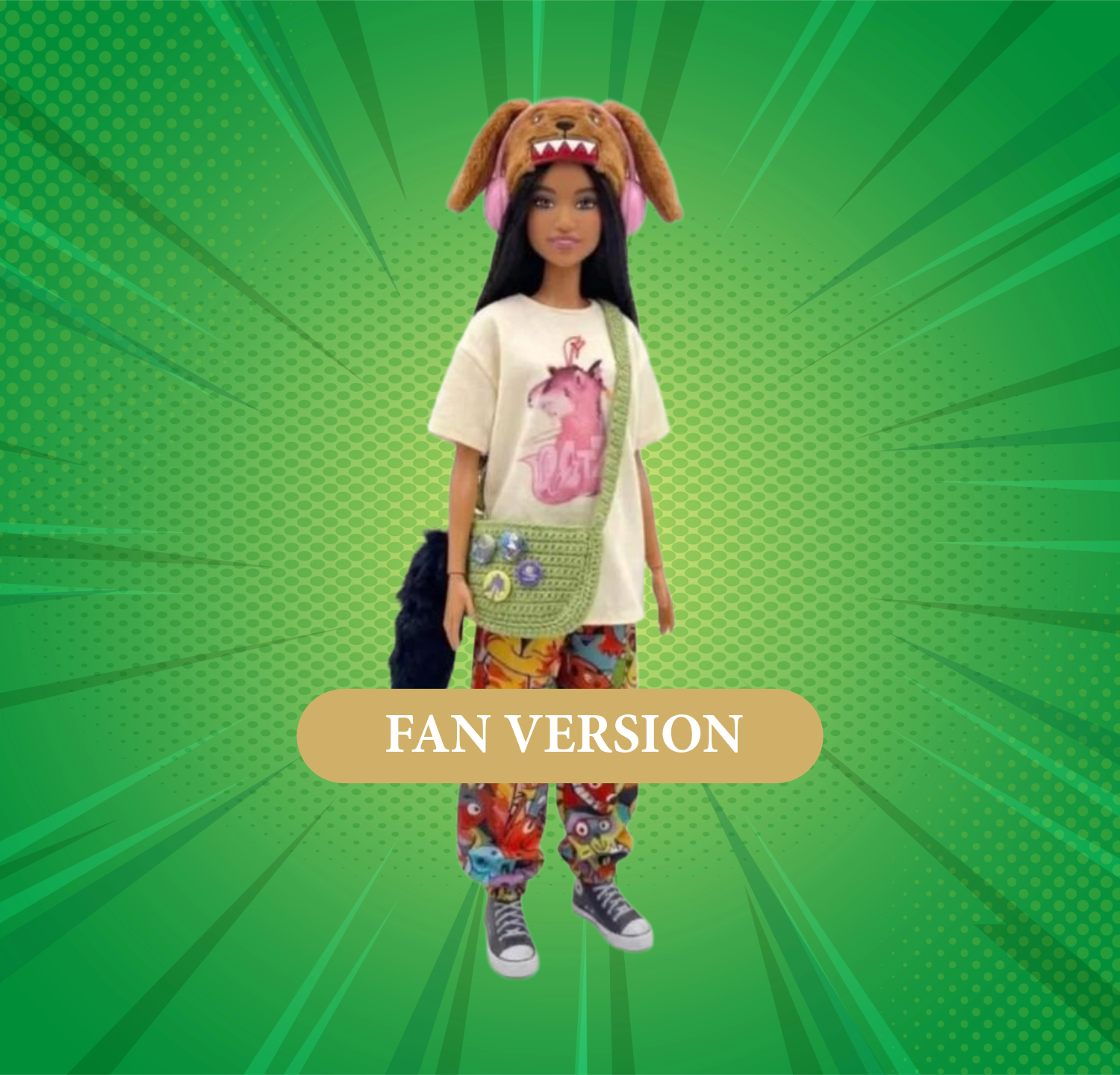
Online, there has been a lot of discussion comparing the official doll to “fan edits.” The fan versions often show a Barbie in mismatched patterns, wearing a colourful hat, perhaps holding a comfort object like a stuffed animal, a style sometimes affectionately called “sensory chaos.” It feels very real to the actual lived experience of many autistic people who prioritise comfort over social norms.
But Mattel made a specific, strategic choice to go with a more neutral aesthetic. Why?
Because this doll isn’t just for the autistic community; it’s for the neurotypical world. To a parent unfamiliar with sensory regulation, a doll in mismatched patterns might just look uncoordinated rather than comfortable. By integrating these accommodations into a standard doll, Mattel is teaching a crucial lesson: Needing support doesn’t make you ‘less than.’ It affirms that using the tools you need to navigate the world is a valid, worthy way to exist, exactly as you are.
Global Roots, Universal Impact
This careful design was achieved through an 18-month collaboration with the Autistic Self Advocacy Network (ASAN). And while the doll is presented as race-neutral to allow more children to see themselves in her, her features have a specific origin story: the design team utilised mood boards of South Asian women, including their own colleagues, to sculpt her face.
This subtle inclusivity breaks stigma across cultures. In many communities, disability is hidden; this doll puts it front and center. Of course, Mattel and ASAN have noted that no single doll can represent the entire autism spectrum. She isn’t meant to be everyone; she is meant to be a start.
Making the Invisible, Visible
Since you cannot sculpt sensory processing disorder or executive dysfunction, Mattel had to make the internal experience external by focusing on the toolkit:
- The Fidget Spinner: A clip-on spinner attached to her hand. It normalizes the need for constant movement to maintain focus.
- The Headphones: They signal that the world can be loud and overwhelming, transforming a medical aid into a fashion accessory.
- The AAC Device (Language Board): It challenges the idea that “speaking” is the only way to communicate intelligence.
The Universal Pressure to Mask
This brings us to the most powerful aspect of the doll: the refusal to “mask.”
Masking is the exhausting effort to hide autistic traits to fit in. While this pressure exists for everyone, it is uniquely heavy for women and girls. Society raises girls to be the peacekeepers—to be polite, quiet, and socially attuned. For an autistic girl, the pressure to “perform” normalcy can be crushing.
This doll quietly rebels against that pressure in two profound ways:
- Permission to Look Away: The doll’s eyes are painted to look slightly to the side. In a world that demands eye contact as a sign of attention, this feature validates that listening doesn’t always require staring.
- Permission to Stim: The doll features articulated joints specifically designed to allow for “flapping” or hand movements. For decades, girls have been told to have “quiet hands.” This doll reverses the script, normalising self-regulation as a healthy tool.
The official autistic Barbie might not look like the reality of a Tuesday afternoon sensory crash, but she does something arguably more important for the public eye: she normalises the tools of autism.
She teaches kids that headphones and fidget spinners aren’t toys or distractions, they are essential supports. And for the autistic girls I work with, she offers a rare and beautiful gift: the permission to stop hiding, put on their headphones, and just be.
About Pratishta Natarajan
Pratishta has worked in autism clinics and at camps, she has spent over 8 years working with neurodivergent youth in a close context. She continues to coach neurodivergent teenagers and loves exploring the developments in advocacy/acceptance and representation in the field of autism.